
Managed marketing service
Your whole marketing function, managed
Not a tool to run or a stack of agencies to coordinate, a service that plans, produces, and runs your marketing for you. Gameplan is the full team, done for you on a flat monthly fee, so brand, website, awareness, and collateral all draw from one source of truth and one team is accountable for the result.
Full-stack team · 48-hour kickoff · From $319–$2,700/mo · No lock-in
The honest definition
What a managed marketing service actually is
A managed marketing service runs your entire marketing function for you under one engagement, instead of you hiring in-house or coordinating separate agencies. Gameplan is one: your brand, website, awareness, and collateral planned, produced, and run for you on a flat monthly fee from $319 to $2,700, month-to-month with no lock-in. You point at what matters and approve the work; one team does the rest.
The word that matters is managed. You are not buying software you still have to operate, or a set of retainers you have to stitch together. You are buying the finished marketing, handled end to end, the way you would hire a firm to run your books rather than buying accounting software and doing it yourself.
That is what makes the economics work: real operators own the strategy and the quality, and AI does the heavy lifting on production. You get the output of a full marketing department for the price of a subscription, without an in-house hire or a stack of agency retainers.
Managed, end to end
A service that hands back finished work, not a to-do list
Search "managed marketing service" and most results say the same thing: contact us for a custom quote. No number, just a form and the quiet sense that the price depends on how much they think you will pay. We publish ours, and we run the work rather than hand it back.
Gameplan is built the other way round. You brief what matters, we produce it, you approve it, it ships, usually with work back to you within 48 hours. No prompts to write, no freelancers to chase, no account-manager layer between you and the people doing the work. It is marketing handled, not marketing to manage.
And we start where it counts: the foundation. Most small-business marketing fails because the website says one thing and the social says another. We settle your brand and message first, then everything else is produced from that single source of truth, which is exactly why it stays consistent.
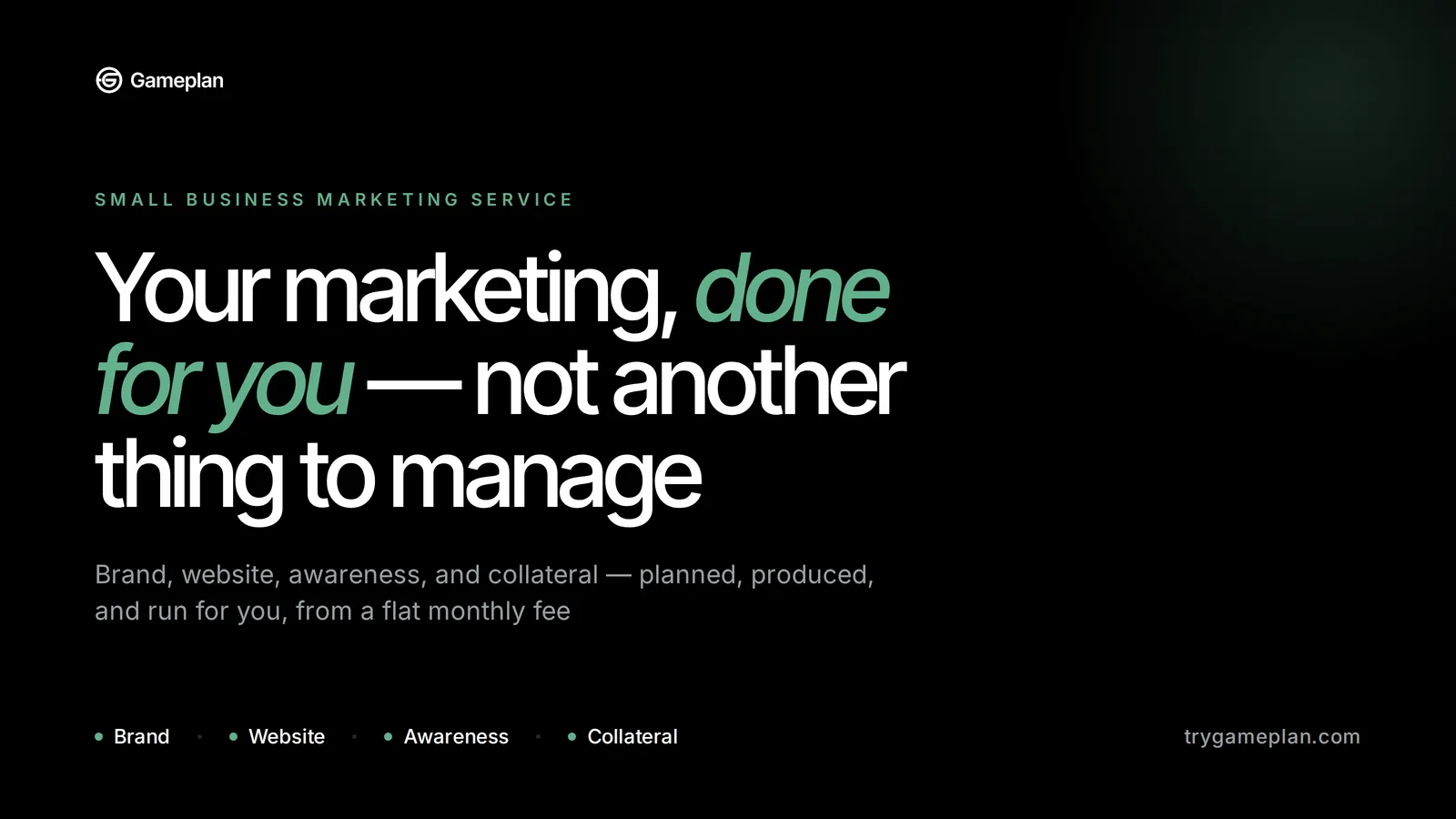
The full marketing function, run for you as one service
What you get
The whole marketing function, not one channel
A true managed service covers the full stack, built in order so each part reinforces the last, the four rings:

Brand
positioning, messaging, and a defined ideal customer, so everything downstream says the same thing.

Website
a fast, AI-search-ready site, live in about three weeks, on your own stack, that you own outright.

Awareness
SEO, AEO, and content that bring the right people to the site, built on the same foundation.
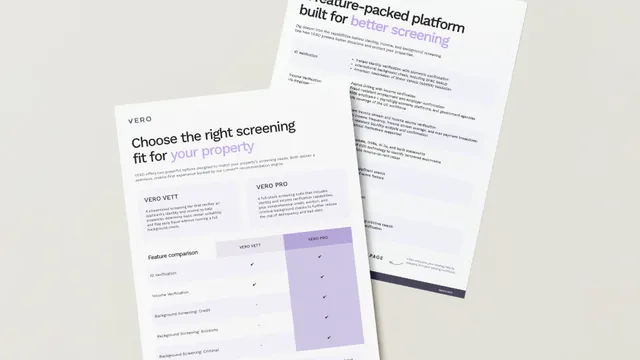
Collateral
the decks and one-pagers your sales conversations actually need, on-brand and ready.
You do not have to buy all four at once, many businesses start with the website and expand outward. But run as one managed service, they all draw from the same foundation, which is how the work stays consistent instead of saying one thing here and another thing there.
What it costs
The honest number
Most marketing companies will not publish a price, because a custom quote lets them price to what they think you will pay. We take the other view: you should be able to see the number before you ever get on a call.
A full-stack managed marketing service from Gameplan is a flat $319 to $2,700 a month depending on scope, plus a one-time foundation from $5,000 (brand, website, awareness, and collateral). It is month-to-month with no lock-in. Weigh that against the two options owners usually compare it to.
For the fuller breakdown of what each model costs, see how it compares to outsourced marketing, or the exact plans on the pricing page.
vs a traditional agency
Managed service or agency?
They look similar from the outside, an outside team does your marketing. Underneath they are two different models. An agency sells a specialty on a retainer and owns its channel; a managed service runs the whole function and owns the result. Here is the honest side-by-side.
| Managed marketing service | Traditional agency | |
|---|---|---|
| Scope | Full stack: brand, website, awareness, collateral | One specialty per retainer |
| Cost | One flat monthly fee, $319 to $2,700 | $3,000 to $15,000+ per month, per service |
| Time to start | Kickoff in 48 hours | 4 to 8 weeks of onboarding |
| Contract | Month-to-month, no lock-in | Often a 6 to 12 month commitment |
| Accountability | One named owner of the whole result | An account manager for that one channel |
| Best for | Broad, coordinated coverage on a small-business budget | A deep specialist need with the budget to match |
An agency is the right tool when you need one thing done deeply and can pay for that depth. A managed service is the right tool when you need your whole marketing function run, coordinated, and owned, on a small-business budget. For the full comparison against agencies, freelancers, and DIY, see the compare page, or the modern AI marketing agency model behind how we deliver it.
Is it for you?
Who this suits
It is likely the right fit if:
- ✓ You need your whole marketing run, not another tool to learn or another freelancer to manage
- ✓ You can't justify a $150k in-house hire or a stack of $3k+/mo agency retainers, but the marketing still has to happen
- ✓ You'd rather point at what matters, approve the work, and get on with running the business
- ✓ You want one team accountable for the entire result, not five vendors each owning a slice
It is a weaker fit if you already have a capable in-house team and only want overflow help on a single channel, hire a specialist freelancer or a specialist agency for that. What Gameplan sells is the finished marketing, run for you, not a slice of it.
Narrow it down
Weighing your options?
If you are comparing ways to get marketing done, start with the honest overviews: a marketing agency for small business, a small business marketing service, fully outsourced marketing, a fractional marketing team, the done-for-you marketing service, or the modern AI marketing agency model that gives you agency-grade output at a fraction of the cost.
Ready to see the specifics? See exactly what it costs, or get your free visibility snapshot to find out where you stand today.
Questions
Common questions
What is a managed marketing service?
A managed marketing service runs your entire marketing function for you under one engagement, instead of you hiring in-house or coordinating separate agencies. Gameplan is one: your brand, website, awareness, and collateral planned, produced, and run for you on a flat monthly fee from $319 to $2,700, month-to-month with no lock-in. You point at what matters and approve the work; one team does the rest.
How much does a managed marketing service cost?
Gameplan runs on a flat monthly fee from $319 to $2,700 depending on scope, plus a one-time foundation from $5,000 for the full stack (brand, website, awareness, and collateral). It is month-to-month with no lock-in. Compare that to $3,000 to $15,000+ a month per discipline at a traditional agency, or $152,000+ a year all-in (salary, payroll tax, benefits, and tools) for a single in-house hire who still would not cover the whole function.
What is included in a managed marketing service?
The whole marketing function under one fee, not a single channel: your brand foundation (positioning, messaging, ideal customer), a fast AI-search-ready website you own, awareness (SEO, AEO, and content), and the sales collateral your conversations need. It runs on a simple brief-produce-approve-ship rhythm, so you get finished marketing back, usually within 48 hours, rather than a to-do list.
How do managed marketing services differ from agencies?
Managed marketing services vs agencies comes down to scope and ownership. A traditional agency sells one specialty per retainer, usually built for larger clients and siloed by channel, so covering your full stack means stacking three or four retainers. A managed marketing service runs your whole operation, brand, website, awareness, and collateral, under one flat engagement with a named owner. The agency does a slice; the managed service runs the whole function, which is why it is usually broader, faster, and cheaper for a small business.
Is a managed marketing service cheaper than hiring in-house?
For most small businesses, yes. A single in-house marketing hire costs $152,000+ a year all-in, salary plus payroll tax, benefits, and tools (salary alone is closer to $63,000), and even then one person cannot cover brand, website, content, social, email, and design at once. A managed service gives you a whole team's worth of disciplines for a flat monthly fee from $319 to $2,700, with no hiring, onboarding, or long-term contract.
Does a managed marketing service require a long contract?
It should not. Gameplan is month-to-month with no lock-in, which means the service has to keep earning your business every month. If a provider needs a twelve-month contract to work with you, that is a signal worth questioning before you sign.
What are the benefits of a managed marketing service?
You get your whole marketing function, brand, website, awareness, and collateral, run by one accountable team for a flat monthly fee, with no hiring, no stack of agency retainers, and no long-term lock-in. Senior operators own strategy and quality while AI handles production, so you get a full department's output from $319 to $2,700 a month.
What are the disadvantages of a managed marketing service?
The honest trade-off: a managed service is built for broad, coordinated coverage, not one deep specialist need. If you require heavy technical paid search at scale, or you want to hand-pick and manage each specialist yourself, a dedicated agency may fit better. You are also trusting one team with the whole function rather than owning execution in-house.
Managed marketing service vs an in-house marketing team, which should a small business choose?
A single in-house hire costs $152,000+ a year all-in and still cannot cover brand, website, SEO, content, and collateral alone. A managed service gives you all those disciplines for a flat $319 to $2,700 a month, with no recruiting or ramp. Choose in-house only once one function is big enough to justify a dedicated full-time salary.
Get started
Marketing, finally managed
Tell us where you are. We will give you the honest answer on whether Gameplan fits your business right now, even if it does not.
Get your free visibility snapshotFull team from $319–$2,700/mo · 48-hour kickoff · No contracts · You own everything