
From the team at Gameplan
Marketing insights for founders





Top picks

How Much Equity Should a Startup CMO Get? (2026 Guide)
A startup CMO typically receives 0.1% to 0.5% equity, vested over four years with a one-year cliff, though the earliest-stage hires can command more. But most early startups do not need to give away equity at all: a fractional CMO or a managed marketing service delivers senior marketing judgment with no dilution and no full-time cost.
Sep 29, 2026

How to Do Marketing for SaaS: The Founder's Complete Playbook
SaaS marketing follows a clear sequence: nail your positioning first, then build a website that converts trials or demos, set up an awareness engine that brings in qualified traffic consistently, add lifecycle email to turn signups into active users, and track what moves revenue. Most founders skip step one and pay for it later.
Sep 29, 2026

What Is the 3-3-2-2-2 Rule of SaaS?
The 3-3-2-2-2 rule is a SaaS growth benchmark from Bessemer: triple annual recurring revenue two years in a row, then double it three years running. A company that hits it grows ARR roughly 72 times over five years. It is an investor's yardstick for elite growth, not a promise or a plan.
Sep 29, 2026

What Is the 80/20 Rule for Startups?
The 80/20 rule, or Pareto principle, says roughly 80% of your results come from 20% of your inputs. For startups that means a small share of customers, channels, and activities drives most of your revenue. The work is finding that vital 20% and pouring your limited time and budget into it instead of spreading thin.
Sep 29, 2026

What Is the Rule of 40 in SaaS?
The Rule of 40 says a healthy SaaS company's revenue growth rate plus its profit margin should add up to at least 40%. Grow fast, run lean, or strike a balance, as long as the two numbers clear 40 together. Investors use it as a quick read on whether growth is efficient or bought at any cost.
Sep 29, 2026

AI Marketing Tools vs a Done-for-You Service: Which Is Right for a Small Business?
AI marketing tools give you leverage if you have the time and skill to run marketing yourself. A done-for-you service gives you the outcome without the work. Here's how to tell which model actually fits a small business, and where the hidden costs of each one hide.
Sep 14, 2026

The Fractional CMO Alternative: What to Do When You Need Marketing but Not an $8,000-a-Month Hire
A fractional CMO gives you senior strategy on a part-time basis, from $8,000 to $15,000 a month, but they set direction and rarely execute. If you need the marketing actually done, not just planned, here is the honest alternative and who each option is really right for.
Sep 14, 2026

Fractional CMO vs Marketing Agency vs Managed Marketing Service: Which Model Fits Your Stage?
With no marketing team, you have three real options: a fractional CMO brings senior strategy part-time ($8,000 to $15,000 a month) but does not execute; an agency executes specific channels ($3,000 to $15,000+ a month) but rarely owns strategy; a managed marketing service covers both from $319 a month. Your right choice depends on whether your biggest gap is direction, execution, or both.
Sep 14, 2026

What Happens After the AI Builds Your Website
AI builders handle launch but go silent about everything after. Here's what it takes to get from 'site is live' to 'site gets traffic', and why most AI-built sites never make it.
Sep 10, 2026

Why Your AI-Built Website Isn't Getting Any Traffic
AI builders optimize for launch, not search. Five specific reasons your AI-built site isn't getting traffic in Google, and what to do about each one.
Sep 10, 2026
Why Every AI-Built Website Looks the Same
AI builders produce the least distinctive site by design. Here's why they all look the same, and what actually creates a website that sets your business apart.
Sep 10, 2026

What Is a Done-for-You Marketing Service?
A done-for-you marketing service runs your marketing for you (brand, website, content, social, email, and ads) so you don't have to. Here's what it includes, what it costs, and when it's the right fit.
Sep 7, 2026

How Long Does Marketing Take to Work? (Honest Timelines by Channel)
SEO takes 6–12 months to gain real traction. Content builds over 3–6 months. Paid ads can produce clicks within days but reliable ROAS takes 6–8 weeks of optimisation. Email sequences mature over 3–6 months. The honest answer: most marketing channels require 90 days minimum before you can call any result meaningful.
Sep 7, 2026

How to Choose a Marketing Agency for a Small Business (5 Questions That Actually Matter)
Most agency selection advice tells you to 'check their portfolio' and 'ask for references.' That's table stakes. The five questions that actually predict whether an agency will work for your small business are harder to ask, and most agencies won't like them.
Sep 7, 2026
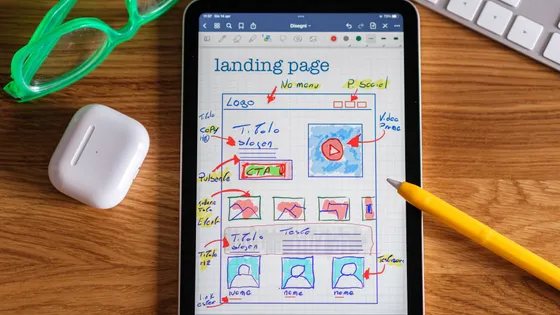
How Much Does a Website Cost for a Small Business? (Real 2026 Numbers)
A small business website costs $17–$23/month for a DIY builder like Wix or Squarespace, $1,500–$8,000 for a freelancer build, $3,000–$15,000+ for a traditional agency, or $5,000 one-time plus $319/month for a managed service like Gameplan. The number that matters is the total cost: software plus your own time after launch.
Aug 26, 2026

Fractional CMO: Advantages for Your Business Strategy
A fractional CMO gives senior marketing leadership at $8,000–$15,000 a month, covering strategy and direction only, not execution. The model works best for businesses in the $1M–$10M revenue range that already have a team to run the plan. Without execution capacity, a brilliant strategy just sits on paper.
Aug 19, 2026

What AI Marketing Without Oversight Actually Looks Like
AI marketing without oversight produces plausible-looking work that is quietly wrong: fabricated statistics, off-brand creative, recycled headlines, misformatted posts. The dangerous failure mode is not gibberish; it is confident, polished content that nobody checked. The fix is a structured handoff where AI handles volume and humans gate every output before it ships.
Aug 10, 2026

What Is the 3-3-3 Rule in Marketing?
The 3-3-3 rule is a simple discipline: three core messages, three channels, three buyer stages. Here's what it means, how it works, and how to apply it.
Aug 10, 2026

What's Actually Working in Small Business Marketing Right Now
What's working in small business marketing in 2026: FAQ-structured content that gets cited in AI answers, an actively maintained Google Business Profile, and commercial-intent pages that sit between a buyer and a decision. What's stopped working: generic AI-generated posts, broadcasting email, and content that exists without a clear buyer intent.
Aug 10, 2026
Why Does AI Search Recommend Competitors Instead of My Company?
You ask ChatGPT the question your customers ask, and it names your competitors, not you. Here are the four reasons why, and how to get cited instead.
Aug 10, 2026

Is SEO Dead? The Honest Answer for Small Businesses
SEO isn't dead, it split in two. Here's the honest answer on what changed, what still works, and what small businesses should do next.
Aug 1, 2026

Stop Playing Listicle Roulette: How to Choose SMB Software
Every 'best tools' listicle hands you homework, not a decision. Here's a four-step framework for choosing small business software without the trial-and-error tax.
Jul 31, 2026

What Is an Outsourced Marketing Department? (And Why Small Businesses Are Replacing Hires With One)
An outsourced marketing department is an external team that runs your entire marketing function for you (brand, website, awareness, and collateral) all under one engagement. Unlike a freelancer (one skill) or an agency (one channel), it covers the whole operation. You get a working marketing function without hiring a full-time team or managing a stack of separate vendors.
Jul 31, 2026

How Much Does Managed Marketing Cost? (2026 Breakdown)
Managed marketing costs $319 to $2,700+/month, plus a one-time build from $5,000. Three things drive the price: how much of the stack is covered, how much new content is created each month, and how much strategic ownership is included. Marketing campaigns are a separate add-on, not included in any base tier.
Jul 18, 2026

How Much Does a Fractional CMO Cost? (2026, Honestly)
A fractional CMO typically costs $8,000 to $15,000 a month for two to three days a week of senior strategy, not execution. Full-time CMO compensation runs $200,000 or more a year including benefits and equity. The fractional model saves money, but only pays off if you already have a team to run the plan.
Jul 9, 2026

How Much Does It Cost to Outsource Your Marketing? (The Honest 2026 Guide)
Outsourcing marketing costs $319 to $2,700/month for a full-stack managed service, $3,000 to $15,000+/month per discipline for a traditional agency, and roughly $130,000 to $150,000 all-in per year for an in-house marketing manager. The cheapest monthly number rarely covers the whole job; scope and commitment terms change the real comparison entirely.
Jul 9, 2026

What Is a Fractional Marketing Team? (And When It Beats Hiring)
A fractional marketing team is your full marketing function hired as a service. What it does, what it costs, and when it beats a hire or an agency.
Jul 9, 2026

Done-for-You Marketing for SaaS: What It Includes and Who It's For
Done-for-you marketing for SaaS: what's included (positioning, website, awareness, lifecycle email) and whether it fits your stage. From $319/mo.
Jun 15, 2026
AI Marketing for Small Business: What It Actually Does
AI marketing for small business means using AI for production (drafts, variations, repurposing) while humans own strategy, brand voice, and quality. A July 2025 Thryv survey found 55% of small businesses now use AI, up from 39%. The tools are affordable; the question is whether you run them yourself or have them run for you.
Jun 14, 2026

Do I Need a Marketing Agency?
You need a marketing agency when you have a clear offer, settled pricing, a defined core customer, and a budget that fits their retainer model, typically $3,000 to $15,000+/month per discipline. Most small businesses without a full marketing team are better served by a managed service that covers the whole stack for less.
Jun 14, 2026

How a Managed Marketing Service Actually Works
A managed marketing service starts within 48 hours of signing, builds your brand and website first, then runs awareness and collateral on a monthly brief-produce-approve-ship rhythm. AI does the heavy lifting on production; experienced people own strategy and the final call. You approve work; the team does it.
Jun 14, 2026
Is Your Website Ready for AI Search? A Checklist
A website is AI-search-ready when it answers buyer questions directly, loads fast (95+ on Google PageSpeed Insights), uses semantic HTML, and carries structured data so machines can extract and quote your content. Most sites fail two or three of these. None require a rebuild; they require treating AI readability as a real requirement.
Jun 14, 2026

Who Should You Hire to Run Your Business's Marketing?
Four options exist for small business marketing: in-house hire ($130,000 to $150,000+ all-in per year), traditional agency ($3,000 to $15,000+/month per discipline), freelancers (flexible but you become the coordinator), or a managed service ($319 to $2,700/month for the full stack). Here's how to choose, with real costs.
Jun 12, 2026

How Much Should a Small Business Spend on Marketing?
The U.S. Small Business Administration recommends 7 to 8 percent of gross revenue for established small businesses under $5 million in revenue. In practice, the right number isn't a percentage; it's whichever delivery model fits where you are: in-house hire, agency, DIY tools, or a managed service. Each has a real, knowable cost.
Jun 7, 2026

Managed Marketing Service vs Agency vs In-House
Compare a managed marketing service vs an agency vs in-house on real 2026 costs, time to launch, and coverage, and find which model actually fits your business.
Jun 2, 2026
What Is a Managed Marketing Service?
A managed marketing service is a third-party team that runs your entire marketing operation for you (brand, website, social, email, paid ads, and sales collateral) under one flat monthly fee. Unlike a traditional agency that handles a single channel, it covers your full marketing stack with one team accountable for the result.
May 26, 2026

Drive Startup Growth with HubSpot CRM
HubSpot CRM helps a startup grow by centralizing every contact, automating follow-up emails, and showing which marketing channels are delivering leads. It is worth it once you have a steady lead flow and clear messaging. Before that stage, the free tier is enough, and buying paid plans ahead of the foundation wastes the investment.
Mar 8, 2024

Your Go-To-Market Plan Doesn't Have to Be Complicated
A go-to-market plan is a written answer to three questions: who you sell to, what you say to them, and how you reach them. For a small business or startup, it is the foundation every piece of marketing builds on. Without it, you can produce a website, run ads, and post on LinkedIn, and still reach nobody specific.
Mar 7, 2024

The Power of Custom Branding & Web Design
Custom branding and web design mean building a visual identity and website from your business's specific positioning rather than a generic template. Done together, they create a coherent system: the brand sets the story and look; the website delivers it to buyers and search engines in the same voice, from day one.
Mar 4, 2024

The Role of Brand Personality and Voice in Marketing
Brand personality is the set of human traits your business projects consistently. Brand voice is the tone and language style that expresses those traits in every message you send. Together they determine whether buyers remember you, trust you, and choose you over similar options. Defining both before you communicate is the foundational step most small businesses skip.
Dec 20, 2023

Why Your Small Business Needs Branding to Succeed
Small businesses need branding because it shapes how buyers recognize, remember, and trust you before they ever contact you. Branding covers your visual identity, your message, and how you show up across every channel. Without it, even good marketing spends money without building anything, because there is no consistent signal for buyers to latch on to.
Dec 19, 2023

Why Content Marketing is Key for Startups & SMBs
Content marketing helps startups and SMBs build trust, attract inbound leads, and grow without the cost of paid acquisition. A small team can compete by publishing content that answers buyer questions, ranks in search, and compounds over time. The starting point is a defined audience, a consistent format, and a realistic publishing cadence.
Aug 2, 2023

Generative AI vs AI Automation: What's the Difference?
Generative AI creates original content (copy, images, and code) from a prompt. AI automation handles repetitive tasks by following predefined rules, like routing leads or scheduling posts. Most small businesses need both, but they solve different problems: generative AI replaces creative production time; automation replaces manual process time.
Jul 26, 2023

The Importance of Surveying Customers to Drive Success
Surveying customers gives small business owners direct evidence of what is working, what is not, and where buyers are likely to churn. Businesses that collect and act on regular customer feedback make sharper product, pricing, and retention decisions than those running on assumption. It is the lowest-cost research method available to a small business.
Jul 17, 2023
No articles in this category yet.