
AI marketing agency
The AI marketing agency for businesses without a marketing team
AI does the volume. Real operators own the outcome. Gameplan is the marketing agency built on both: the full team, done for you, from a flat monthly fee, so you get agency-grade brand, website, awareness, and collateral without agency-grade bills or generic AI slop.
Full-stack team · 48-hour kickoff · From $319–$2,700/mo · No lock-in
The honest definition
What an AI marketing agency actually is
An AI marketing agency runs your marketing using AI to do the production heavy-lifting while real marketers own the strategy and quality. Gameplan is one: a full-stack team, brand, website, awareness, and collateral, built and run for you from a flat monthly fee, month-to-month with no lock-in. AI gives you the speed and volume; experienced operators make sure what ships is on-brand and actually works.
The distinction matters because "AI marketing" has come to mean two very different things. One is a pile of tools you still have to run, prompt, and clean up yourself. The other is a service that uses AI internally to deliver finished marketing, so you never touch a prompt. Gameplan is the second kind.
That's what makes the economics work: AI absorbs the volume that used to need a room full of juniors, and senior operators spend their time on judgment, not busywork. You get the output of a full marketing department for the price of a subscription.
The model
AI does the volume, real operators own the outcome
Search "AI marketing agency" and you'll mostly find two things: agencies bolting a chatbot onto the same old billable-hours model, and tool marketplaces that hand you the AI and wish you luck. Neither solves the actual problem for a business without a marketing team.
Gameplan is built the other way round. AI handles the production, the drafts, the variations, the repetitive work that used to define a marketer's week, so the pace and volume are genuinely different. But nothing ships as raw AI output. Real operators own the strategy, the brand voice, and the final call on everything, because that's the part AI can't be trusted with.
And we start where it counts: the foundation. Most marketing fails because the website says one thing and the social says another. We settle your brand and message first, then AI produces everything downstream from that single source of truth, which is exactly why it doesn't come out generic.
The full marketing function, produced at AI speed, owned by real operators
What you get
The whole marketing function, not a chatbot
A real AI marketing agency covers the full stack, built in order so each part reinforces the last, the four rings:
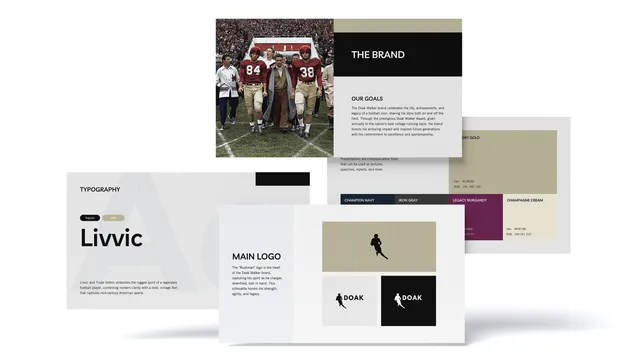
Brand
positioning, messaging, and a defined ideal customer, so everything downstream says the same thing.
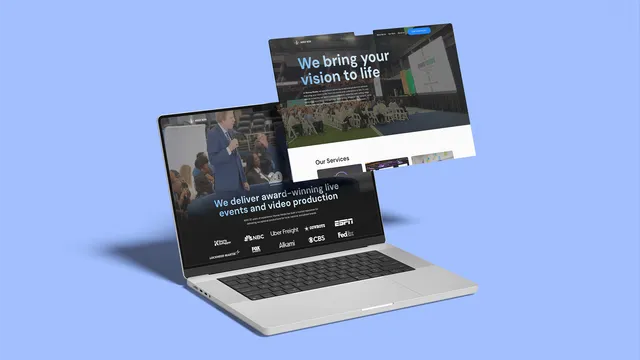
Website
a fast, AI-search-ready site, live in about three weeks, on your own stack, that you own outright.
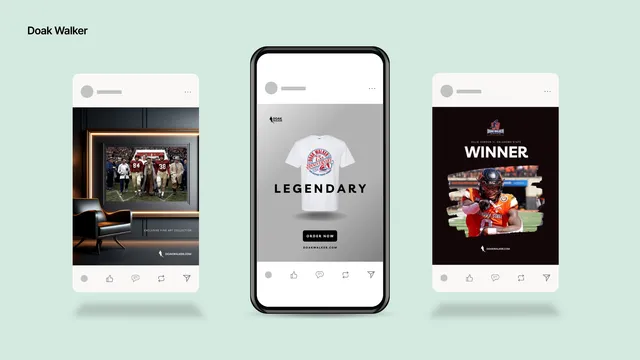
Awareness
social, email, and content that bring the right people to the site, built on the same foundation.
Collateral
the decks and one-pagers your sales conversations actually need, on-brand and ready.
You don't have to buy all four at once, many businesses start with the website and expand outward. But built as one department, they all draw from the same foundation, which is how AI-produced work stays consistent instead of saying one thing here and another thing there.
Is it for you?
Who this suits
It's likely the right fit if:
- ✓ You need real marketing but can't justify a $150k in-house hire or a $5k+/mo agency retainer
- ✓ You want the speed and volume AI makes possible, without the generic, off-brand output AI alone produces
- ✓ You'd rather point at what matters and approve the work than manage tools, prompts, and freelancers yourself
- ✓ You want a real brand, a real website, and real awareness, not a pile of AI-spun content nobody owns
It's a weaker fit if you already have a capable in-house team and only want a set of AI tools to run yourself, buy the tools and keep the control. What Gameplan sells is the finished marketing, not the software.
Narrow it down
Weighing your options?
If you're comparing ways to get marketing done, start with the honest overviews: a marketing agency for small business, a done-for-you small business marketing service, a full managed marketing service, fully outsourced marketing, or a fractional marketing team versus building in-house.
Ready to see the specifics? Compare every option side by side, see exactly what it costs, or get your free visibility snapshot to find out where you stand today.
Questions
Common questions
What is an AI marketing agency?
An AI marketing agency runs your marketing using AI to do the production heavy-lifting while real marketers own the strategy and quality. Gameplan is one: a full-stack team, brand, website, awareness, and collateral, built and run for you from a flat monthly fee, month-to-month with no lock-in. AI gives you the speed and volume; experienced operators make sure what ships is on-brand and actually works.
How is an AI marketing agency different from a traditional marketing agency?
A traditional agency staffs your work with billable hours, so each discipline is a separate retainer, typically $3,000–$15,000+ a month, and the pace is limited by how many people they put on your account. An AI marketing agency uses AI to produce the volume, so one flat fee covers the whole function and work ships faster. The catch with going AI-only yourself is quality and brand consistency; Gameplan keeps real people accountable for both, so you get agency-grade output at a fraction of the cost.
Does AI do all the work, or are there real people involved?
Both, and the split is the whole point. AI does the volume: drafts, variations, production, and the repetitive work that used to eat a marketer's week. Real operators own the outcome: strategy, positioning, editorial judgment, brand voice, and the final say on everything that ships. You never get raw AI output; you get work a senior marketer has shaped and stands behind. That's how the economics work without the quality dropping.
How much does an AI marketing agency cost?
Gameplan runs on a flat monthly fee, from $319 to $2,700 a month depending on scope, plus a one-time foundation from $5,000 for the full stack (brand, website, awareness, and collateral). It's month-to-month with no lock-in. Compare that to $3,000–$15,000+ a month per discipline at a traditional agency, or $152,000+ a year all-in (salary, payroll tax, benefits, and tools) for a single in-house hire who still wouldn't cover the whole function.
What's included with Gameplan's AI marketing agency?
The whole marketing function under one flat fee, not a single channel on a retainer: your brand foundation (positioning, messaging, ideal customer), a fast AI-search-ready website you own, awareness (social, email, and content), and the sales collateral your conversations need. It runs on a simple brief-produce-approve-ship rhythm: you point at what matters, the team produces it, you approve, it ships, usually with updates back to you within 48 hours.
Will AI-produced marketing sound generic or hurt my brand?
That's the real risk with AI-only marketing, and it's exactly what the human layer exists to prevent. Every engagement starts by locking your brand foundation, positioning, messaging, and voice, before anything is produced, so AI works from your brand rather than a generic prompt. Real operators review and edit everything that ships. The result reads like you, not like a chatbot, because a person is accountable for it every time.
Get started
The marketing team, at AI speed
Tell us where you are. We'll give you the honest answer on whether Gameplan fits your business right now, even if it doesn't.
Get your free visibility snapshotFull team from $319–$2,700/mo · 48-hour kickoff · No contracts · You own everything